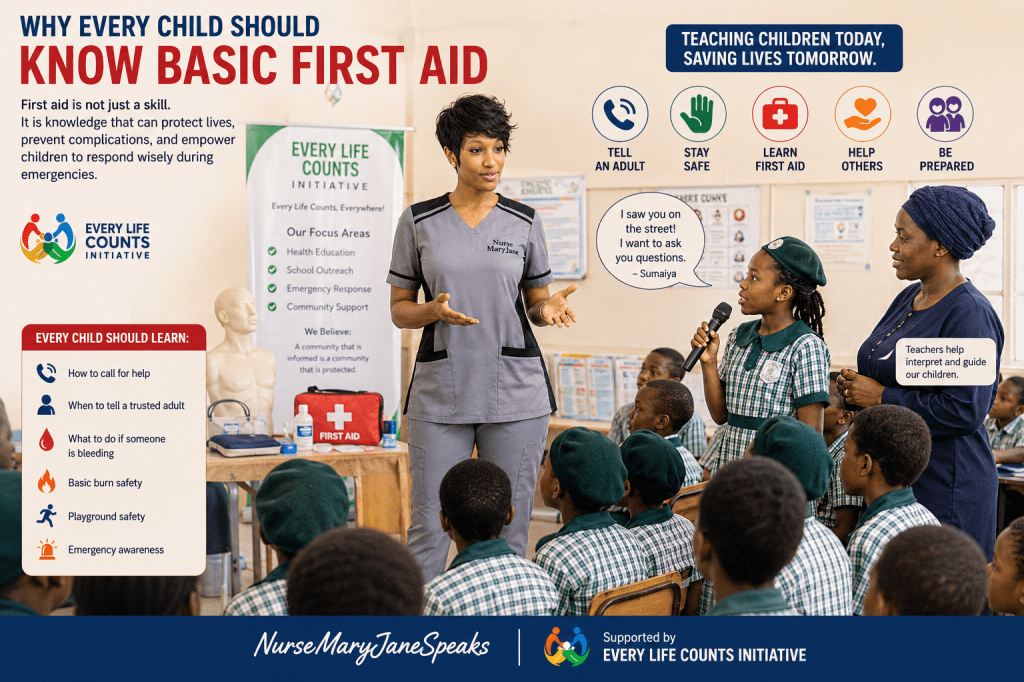
What If Every Child Knew Basic First Aid?
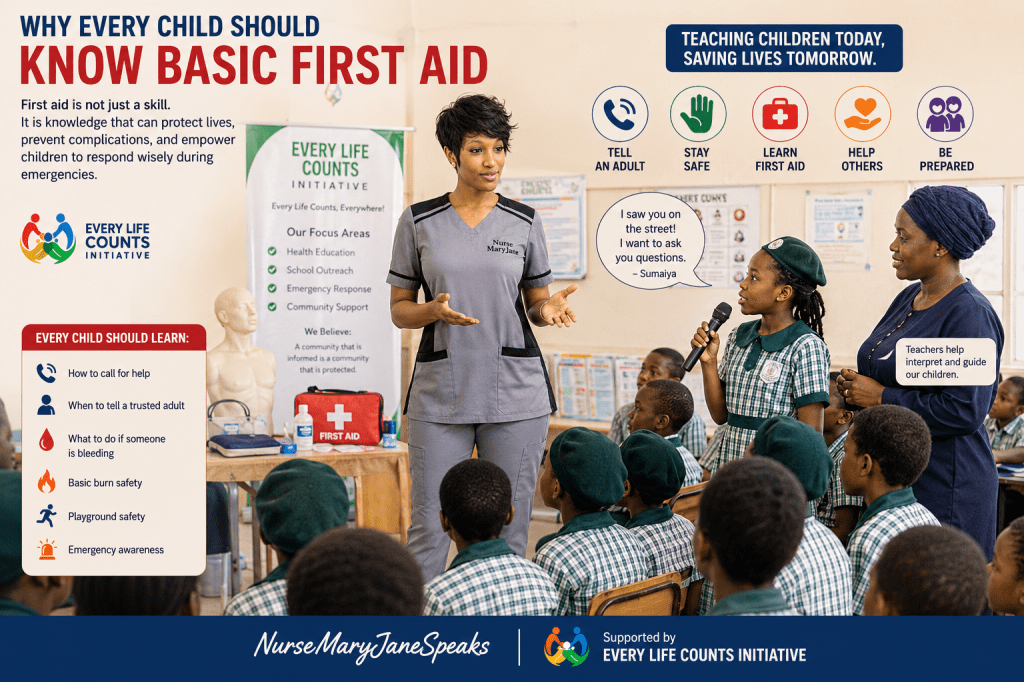
Imagine a child witnessing a classmate collapse on the playground.Imagine another child watching a younger sibling suffer a burn at home.Imagine a group of children seeing a friend bleed after a fall.Now imagine that instead of panicking, they know what to do.Not because they are healthcare professionals.Not because they are adults.But because someone took the time to teach them.As a nurse and community health educator, I have come to believe that one of the most overlooked opportunities in public health is teaching children basic first aid and emergency response skills.Many people assume first aid is knowledge reserved for healthcare workers. However, emergencies do not wait for a doctor, nurse, or ambulance to arrive. In many situations, the first person present is a parent, teacher, neighbor, or even another child.Children are naturally curious learners. They can understand important concepts such as:
•How to call for help during an emergency
• How to identify danger and keep themselves safe
• Why an unconscious person should never be given food or water
• How to respond to burns using clean running water
• How to seek help when someone is choking, bleeding, or unwell
These simple lessons can make a significant difference.Teaching children first aid is not about turning them into healthcare professionals. It is about helping them become more aware, more responsible, and better prepared to respond appropriately when emergencies occur.Beyond emergency response, first aid education also builds confidence, empathy, leadership, and problem-solving skills. Children learn that they can play a role in protecting life and supporting others.During our school health outreaches, I have seen firsthand how eager children are to learn practical health skills. Their questions are thoughtful. Their enthusiasm is inspiring. Their ability to retain information often surprises adults.This is why I believe first aid education should not be an afterthought.It should be a priority.Imagine the impact if every school intentionally taught age-appropriate first aid skills.Imagine communities where children grow up understanding safety, prevention, and emergency response.Imagine a generation that is better prepared to protect itself and others.Public health is not only about treating disease.It is also about equipping people with knowledge before emergencies happen.And perhaps one of the best places to start is with our children.
Because every life counts.
— Nurse MaryJane Speaks
Supported by Every Life Counts Initiative