CANCER DOES NOT DISCRIMINATE: A SILENT BATTLE AFFECTING YOUNG AND OLD
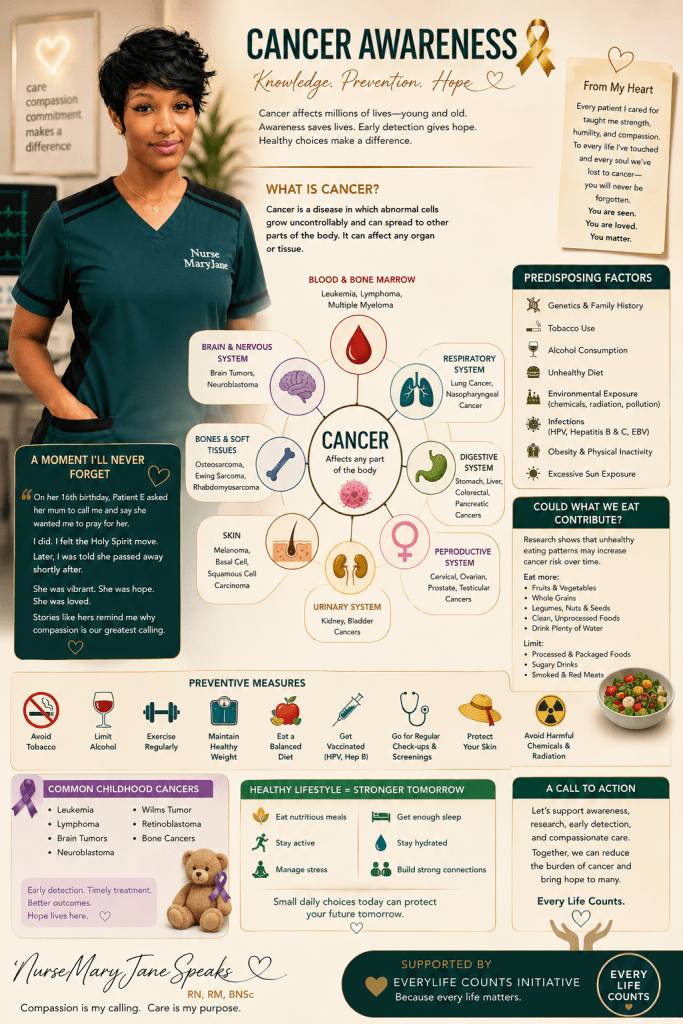
As a nurse, there are experiences that remain etched in one’s memory forever.During my posting in the children’s ward, I cared for many children battling different forms of cancer. These children ranged from as young as 18 months to 15 years old. They came with dreams, hopes, laughter, and families who desperately prayed for a miracle.One observation that repeatedly caught my attention was that a significant number of our pediatric cancer patients either came from or resided in Benue State. As I shared this observation with colleagues, many acknowledged noticing a similar pattern.While this observation alone does not establish a cause-and-effect relationship, it raises important questions that researchers and public health experts may wish to investigate further. Understanding environmental, genetic, dietary, occupational, and other possible risk factors within communities could provide valuable insights for prevention and early detection.This observation is based on personal clinical experience and should not be interpreted as scientific evidence. Further epidemiological research would be required to establish any association.
A Moment I’ll Never Forget
Among the many children I cared for, one young girl left an unforgettable mark on my heart.She was battling leukemia and was approaching her 16th birthday.On that day, while I was on duty, her mother called and said:”Patient E wants you to pray for her. Today is her birthday.”The moment I heard those words, goosebumps covered my body.Her condition was already very critical, but I paused and said a heartfelt prayer for her.Later, after I left the ward, I called to check on her.The news that greeted me was heartbreaking.She had passed away shortly after her 16th birthday.She was vibrant.She was hopeful.She was full of life.Moments like these remind us that cancer is not merely a disease; it is a battle that affects individuals, families, healthcare workers, and entire communities.Behind every diagnosis is a child, a parent, a family, and a future that deserves every chance.
What Is Cancer?
Cancer is a disease in which abnormal cells grow uncontrollably and can spread to other parts of the body.Normally, cells grow, divide, and die in an orderly manner. Cancer develops when this process becomes disrupted, leading to the formation of tumors or abnormal blood cells.Cancer can affect virtually any organ or tissue in the body.
Common Types of Cancer According to Body Systems
Blood and Bone Marrow
•Leukemia
•LymphomaMultiple
•Myeloma
Brain and Nervous System
•Brain Tumors
•Neuroblastoma (common in children)
Respiratory System
•Lung Cancer
•Nasopharyngeal Cancer
Digestive System
•Esophageal Cancer
•Stomach Cancer
•Liver Cancer
•Pancreatic Cancer
•Colorectal Cancer
Reproductive System
•Cervical Cancer
•Ovarian Cancer
•Endometrial Cancer
•Prostate Cancer
•Testicular Cancer
Urinary System
•Kidney Cancer
•Bladder Cancer
Skin/Integumentary System
•Melanoma
•Squamous Cell Carcinoma
•Basal Cell Carcinoma
Bones and Soft Tissues
•Osteosarcoma
•Ewing Sarcoma
•Rhabdomyosarcoma
Childhood Cancers
The cancers commonly seen in children include:
•Leukemia
•Lymphoma
•Brain Tumors
•Neuroblastoma
•Wilms Tumor
•Retinoblastoma
•Bone Cancers
Early diagnosis and timely treatment can significantly improve outcomes and offer hope to affected families.
What Predisposes People to Cancer?
Cancer often develops due to a combination of factors, including:
Genetic Factors:Some individuals inherit genetic mutations that increase their risk.
Tobacco Use:Smoking remains one of the leading causes of preventable cancers worldwide.
Alcohol Consumption:Excessive alcohol intake increases the risk of several cancers.
Poor Diet:High consumption of processed foods, excessive sugars, unhealthy fats, and low intake of fruits and vegetables may contribute to increased cancer risk.
Environmental Exposure:Exposure to certain chemicals, pesticides, industrial pollutants, and radiation may increase risk.
Infections:Certain infections have been linked to cancer, including:Human Papillomavirus (HPV)Hepatitis B and CEpstein-Barr Virus (EBV)
Obesity and Physical Inactivity:Being overweight and physically inactive can increase the risk of several cancers.
Excessive Sun Exposure:Ultraviolet radiation from the sun can increase the risk of skin cancers.
Can Diet Influence Cancer Risk?
Researchers continue to study the relationship between diet and cancer.While no single food causes cancer, unhealthy dietary patterns may increase cancer risk over time.A healthier diet should include:
•Fruits and vegetables
•Whole grains
•Legumes
•Nuts and seeds
•Adequate water intake
At the same time, it is advisable to limit:
•Processed foods
•Sugary drinks
•Smoked and heavily processed meats
Food is not the sole cause of cancer, but healthy nutrition remains an important part of cancer prevention and overall wellness.
Preventive Measures
Although not all cancers can be prevented, the risk can be reduced by:
•Avoiding tobacco productsLimiting alcohol consumption
•Maintaining a healthy weight
•Exercising regularlyEating a balanced diet
•Taking recommended vaccinations such as HPV and Hepatitis B vaccines
•Attending regular medical screeningsSeeking medical attention for persistent symptoms
•Reducing exposure to harmful environmental chemicals
•Practicing safe sun protection
Small daily choices today can help protect your future tomorrow.
A Call to Action
Cancer continues to claim the lives of both young and old.As healthcare professionals, parents, educators, community leaders, policymakers, and citizens, we must support awareness, research, prevention, and early detection efforts.My experience in the children’s ward taught me that behind every diagnosis is a child, a family, and a future that deserves every chance.Let us commit to promoting healthy lifestyles, supporting cancer research, encouraging regular screenings, and standing beside every patient and family facing this battle.Together, we can save lives through awareness, prevention, and early detection.Today, I remember all the children and adults whose lives have been cut short by cancer.I pray that ongoing research will bring better treatments, improved prevention strategies, and ultimately a cure.May the souls of all who have lost their lives to cancer find eternal rest with their Maker.
Amen.
NurseMaryJaneSpeaks, RN, RM, BNSc
Compassion is my calling. Care is my purpose.
Supported by Every Life Counts Initiative”Because Every Life Matters.”


Leave a comment