Sometimes, you walk into a school with the intention of educating children, but you leave with a heart full of questions, reflections and a renewed sense of responsibility.
During one of my routine school health visits, something happened that reminded me why health education must go beyond delivering information and ticking boxes.
While interacting with the students, I noticed different personalities. Some were expressive, others reserved, and some needed a little encouragement to participate.
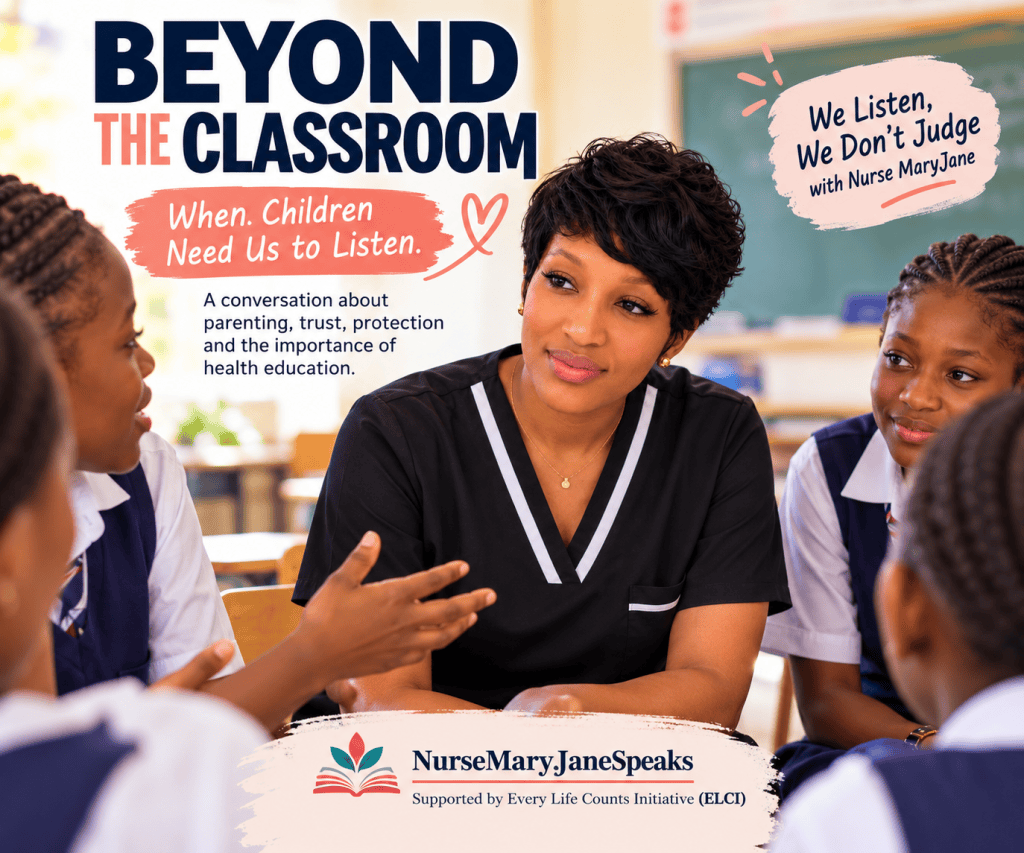
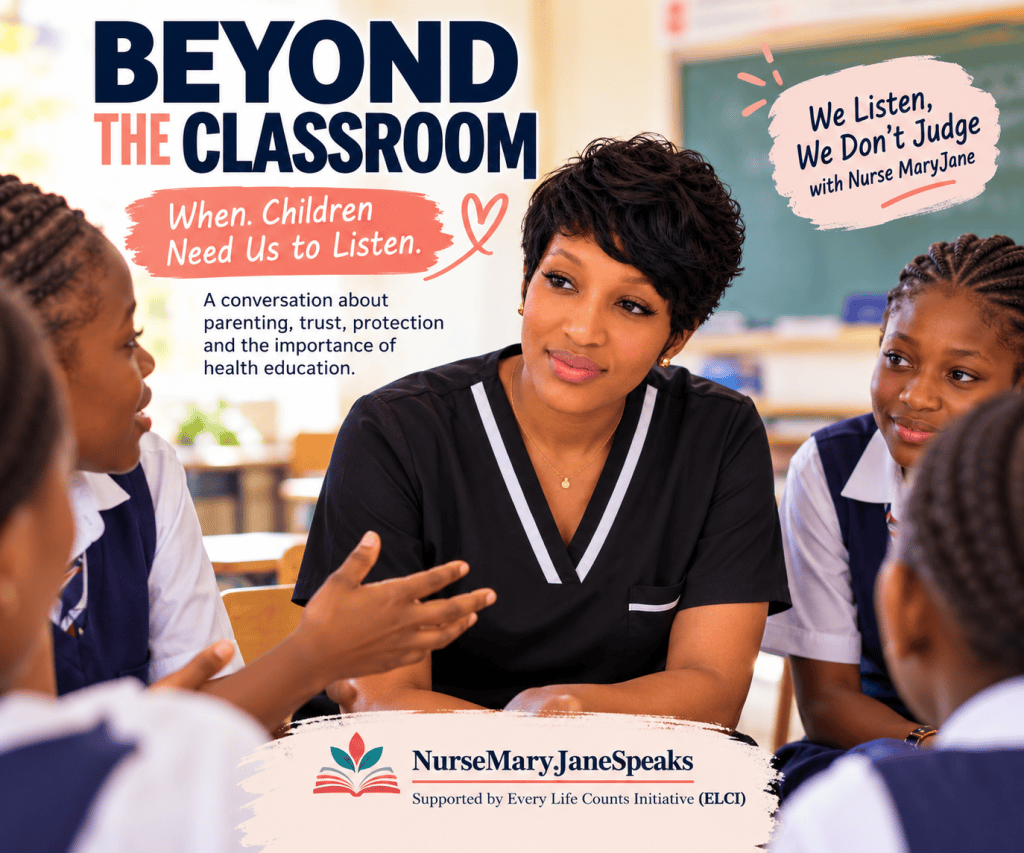
An idea suddenly came to mind: Deep Talk with Nurse MaryJane.
The excitement was immediate! One of the students even suggested a more interesting name: “We Listen, We Don’t Judge with Nurse MaryJane.”
We laughed, agreed on the name, and eventually had our conversation.
What started as a seemingly simple interaction became an eye-opening experience.
The questions came in different forms.
Why are young people discouraged from having sex when they see information on social media suggesting that sexual activity has health benefits?
When is the right time to become sexually active?
Why are certain things considered dangerous?
Some wanted to ask questions in the presence of their peers, while others preferred private conversations.
And as I listened, I realised just how much young people want opportunities to ask questions, express themselves and be heard without immediately being condemned.
Some shared experiences that were difficult to process. Some spoke about peer pressure, relationships and early sexual encounters. Others disclosed experiences involving adults they once trusted.
There were moments of laughter, moments of excitement, requests for hugs and moments when I had to gather myself emotionally.
One particular encounter stayed with me.
I met a young woman whose experiences reminded me that behind the faces we see every day in our classrooms are individual stories we may never know.
Some children are navigating circumstances far beyond what we imagine. Some are exposed to situations they are not emotionally prepared to handle. Some have experienced betrayal from people who should have been protecting them.
And some are silently carrying burdens they don’t know how to communicate.
I left with several reflections.
PARENTS, GUARDIANS AND CAREGIVERS, PLEASE BE INTENTIONAL.
Discipline is important, but so is emotional connection.
Correct your children, but don’t make them afraid of approaching you when they make mistakes or encounter difficult situations.
Listen to them.
Create room for uncomfortable conversations.
Be interested in their friendships, their experiences, their online activities and the information they consume.
Don’t assume that because your child is physically present at home, emotionally available or academically performing well, you know everything happening in their world.
Sometimes, the children who appear to have everything going well are struggling with things they cannot bring themselves to discuss.
TO OUR EDUCATORS AND HEALTHCARE PROFESSIONALS:
Our responsibility extends beyond teaching facts.
We must create opportunities for age appropriate conversations about bodily autonomy, personal safety, consent, healthy relationships, puberty, sexual and reproductive health, HIV prevention, emotional wellbeing and responsible decision making.
We must also recognise when a disclosure requires professional intervention, safeguarding or referral.
Young people are already accessing information from social media, friends and other sources. The question is whether they are receiving accurate, age appropriate information that helps them make informed decisions.
Silence is not always protection. Sometimes, silence leaves children vulnerable to misinformation and exploitation.
And to the young people reading this:
Your questions are valid. You deserve accurate information. You deserve to be treated with dignity. You deserve protection, and you should never feel compelled to exchange your safety, body or affection for acceptance, money, gifts or attention.
If an adult exploits your trust or takes advantage of your vulnerability, the responsibility belongs to that adult. You deserve help, not shame.
I keep thinking about those young faces, their questions, their laughter and the things they trusted me enough to share.
Childhood is a precious season. It should be a time to learn, explore, grow and develop under the protection and guidance of responsible adults.
We cannot prevent every difficult experience, but we can do better at creating environments where children feel safe enough to speak, where adults are attentive enough to notice, and where appropriate support is available when they need it.
Sometimes, the most important health intervention begins with a conversation.
Let us stop waiting until something goes wrong before we become interested in the lives of our children.
Let us listen. Let us educate. Let us protect.
Because every child deserves the opportunity to experience childhood, not merely survive it.
Written and shared by NurseMaryJaneSpeaks
Supported by Every Life Counts Initiative (ELCI).
Every Life Counts. Every Voice Matters. Every Child Deserves Protection.


Leave a Reply