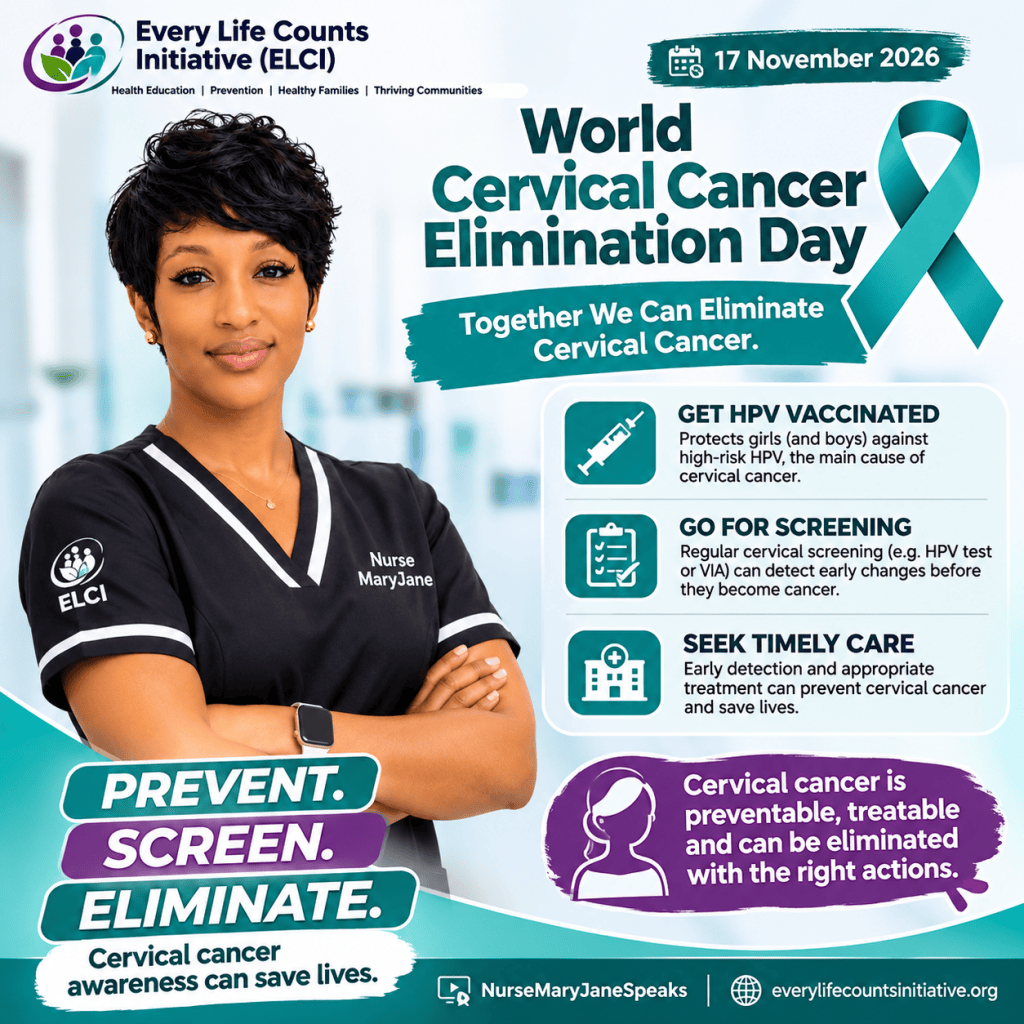
17 November 2026
Campaign theme: Together We Can Eliminate Cervical Cancer.
Introduction
Cervical cancer remains a significant public health concern, affecting women and families across the world. Despite being largely preventable, it continues to cause illness, emotional distress and avoidable deaths, particularly in communities where access to vaccination, screening, early diagnosis and treatment is limited.
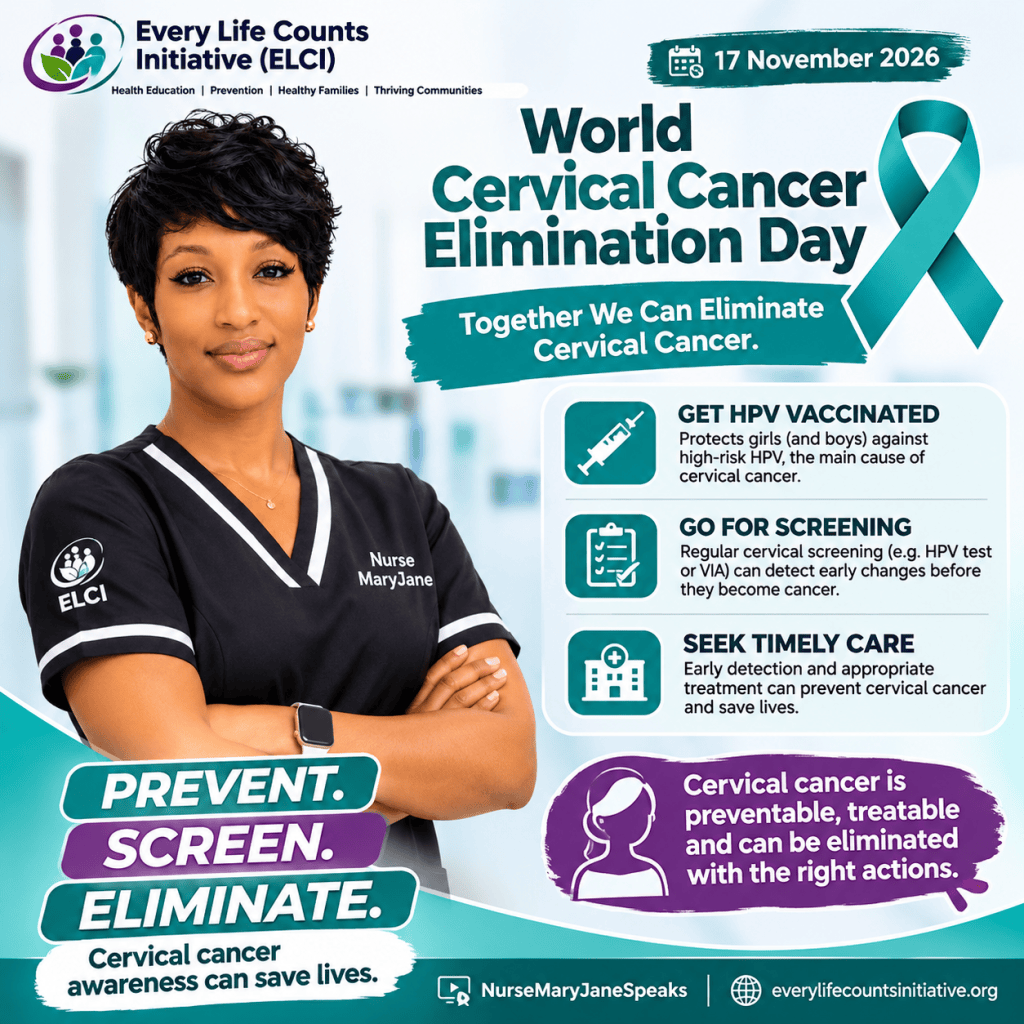
The good news is that cervical cancer is one of the cancers for which effective preventive measures are available. Human papillomavirus (HPV) vaccination, regular cervical screening, early detection and timely treatment can significantly reduce the risk of developing the disease and prevent many deaths.
World Cervical Cancer Elimination Day, observed annually on 17 November, provides an opportunity to strengthen public awareness and encourage collective action towards eliminating cervical cancer as a public health problem.
The 2026 campaign theme, “Together We Can Eliminate Cervical Cancer,” reminds us that governments, healthcare professionals, families, schools, communities and individuals all have a role to play.
At Every Life Counts Initiative (ELCI), we believe that prevention begins with knowledge, access to appropriate healthcare and informed decisions.
1. What is cervical cancer?
Cervical cancer is a disease in which abnormal cells develop in the cervix and grow uncontrollably.
The cervix is the lower, narrow part of the uterus (womb) that connects the uterus to the vagina.
Most cervical cancers develop following persistent infection with high risk types of human papillomavirus (HPV). Over time, these infections can cause changes in cervical cells. If these abnormal changes are not detected and appropriately managed, some may progress to cancer.
The progression usually takes many years, creating an important opportunity for screening and early intervention.
2. Understanding human papillomavirus (HPV)
Human papillomavirus is a group of viruses with many different types. HPV infection is very common and is usually transmitted through intimate skin to skin contact, including sexual contact.
Most HPV infections are cleared naturally by the body’s immune system without causing health problems.
However, persistent infection with certain high risk HPV types can cause abnormal changes in cervical cells that may eventually develop into cervical cancer.
HPV is also associated with some cancers of the vulva, vagina, penis, anus and oropharynx (the back of the throat, including the base of the tongue and tonsils).
It is important to understand that:
- HPV infection does not mean someone has cervical cancer.
- Most HPV infections do not progress to cancer.
- HPV can remain undetected for years.
- A positive HPV test does not establish when the infection was acquired or imply recent infidelity.
- HPV vaccination helps prevent infection with important cancer causing HPV types but does not treat an existing infection.
Public education should address HPV without stigma, blame or discrimination.
3. Risk factors for cervical cancer
Persistent infection with high risk HPV types is the primary cause of cervical cancer.
Factors that may increase the likelihood of persistent infection or progression to cervical cancer include:
- Persistent infection with high risk HPV types.
- HIV infection and other conditions that weaken the immune system.
- Smoking and exposure to tobacco.
- Other sexually transmitted infections.
- Certain reproductive and hormonal factors.
- Limited access to cervical screening and appropriate follow up care.
Women living with HIV have a substantially higher risk of developing cervical cancer and require appropriate screening and follow up according to clinical guidelines.
Having one or more risk factors does not mean that a woman will develop cervical cancer. Equally, women without recognised risk factors should not assume they are completely protected.
4. HPV vaccination: Protecting girls before exposure
HPV vaccination is one of the most effective ways to prevent cervical cancer.
The vaccine protects against HPV types responsible for a large proportion of cervical cancer cases. It is most effective when administered before exposure to HPV.
The World Health Organization recommends HPV vaccination primarily for girls aged 9–14 years, before they become sexually active. Depending on national immunisation schedules and individual circumstances, the recommended dose schedule may vary.
HPV vaccination:
- Helps prevent infection with important cancer causing HPV types.
- Reduces the future risk of cervical cancer.
- Helps prevent other HPV associated cancers.
- Provides the greatest protection when administered before exposure to the virus.
Parents and caregivers should obtain accurate information about HPV vaccination from qualified healthcare professionals and ensure eligible children receive vaccination according to the national immunisation schedule.
An important reminder: HPV vaccination does not eliminate the need for cervical screening later in life. Vaccinated women should still participate in recommended screening programmes.
5. Cervical cancer screening: Why it matters
Cervical screening is an essential preventive healthcare intervention.
Unlike diagnostic testing, screening is performed in people who may feel completely healthy and have no symptoms. Its purpose is to identify high risk HPV infection or abnormal cervical changes before they progress to cancer.
Common screening methods include:
A. HPV testing
This test detects high-risk HPV types associated with cervical cancer. HPV testing is the preferred primary screening method in WHO guidance.
B. Pap smear (Papanicolaou test)
This test examines cervical cells for abnormal changes that may require further assessment or treatment.
C. Visual inspection with acetic acid (VIA)
A healthcare professional applies diluted acetic acid to the cervix and examines it for abnormal areas. This method is used in some screening programmes, particularly where laboratory based testing is less accessible.
The appropriate screening method and interval depend on national guidelines, age, HIV status, medical history and available services.
WHO recommends beginning routine screening with a high performance test at age 30 for the general population, and at age 25 for women living with HIV. Its global strategy also sets a target of screening women by age 35 and again by age 45.
Women should consult qualified healthcare professionals about the screening method and schedule appropriate to their circumstances.
Remember: A woman can have cervical precancer without experiencing any symptoms. This is why screening remains important even when she feels healthy.
6. Signs and symptoms of cervical cancer
Early cervical cancer and precancerous changes may not produce noticeable symptoms.
As the disease progresses, possible warning signs include:
- Unusual vaginal bleeding between menstrual periods.
- Bleeding after sexual intercourse.
- Bleeding after menopause.
- Persistent or unusual vaginal discharge, sometimes with an unpleasant smell.
- Persistent pain in the pelvis, lower back or legs.
- Pain or discomfort during sexual intercourse.
- Unexplained weight loss, fatigue or loss of appetite.
- Swelling of the legs in advanced disease.
These symptoms do not automatically mean that a woman has cervical cancer. Several other conditions can cause similar symptoms.
However, persistent or unusual symptoms should never be ignored. Women experiencing these symptoms should seek medical assessment promptly rather than wait for their next routine screening appointment.
7. Can cervical cancer be prevented?
Yes. Cervical cancer is largely preventable through a combination of vaccination, screening and timely management.
Important preventive actions include:
- HPV vaccination: Ensure eligible girls receive HPV vaccination according to national recommendations.
- Regular screening: Encourage women to access cervical screening at the recommended intervals.
- Early management: Ensure women with positive screening results or precancerous changes receive appropriate assessment and treatment.
- Avoid tobacco: Smoking increases the risk of cervical cancer progression.
- HIV prevention and care: Women living with HIV should receive appropriate screening and follow up.
- Health education: Address misinformation, fear, stigma and misconceptions surrounding HPV and cervical screening.
- Timely healthcare access: Strengthen referral pathways so women can move from screening to diagnosis and treatment without unnecessary delays.
Condoms can reduce the risk of HPV transmission but do not provide complete protection because HPV can affect skin areas not covered by a condom.
8. What happens when screening results are abnormal?
An abnormal screening result does not automatically mean that a woman has cervical cancer.
Some results indicate HPV infection or early cellular changes that require further assessment, monitoring or treatment.
Depending on the screening result and clinical findings, a healthcare professional may recommend:
- Repeat testing.
- Additional HPV testing or cervical assessment.
- Colposcopy, where the cervix is examined using magnification.
- Cervical biopsy when indicated.
- Treatment of precancerous cervical lesions.
The purpose of appropriate follow up is to prevent precancerous changes from progressing to invasive cancer.
Women should complete recommended follow up appointments and seek clarification when they do not understand their results.
9. Can cervical cancer be treated?
Yes. Cervical cancer can be treated, and the possibility of cure is considerably better when it is detected early.
Treatment depends on the stage of the disease, the woman’s general health, reproductive considerations and other clinical factors.
Available treatment options may include:
- Surgery.
- Radiotherapy.
- Chemotherapy.
- Other systemic treatments, including selected targeted therapies or immunotherapy where clinically appropriate.
- Palliative care to manage symptoms and improve quality of life.
Treatment decisions should be made by an appropriate multidisciplinary healthcare team.
Women diagnosed with cervical cancer need more than medical treatment. They may also require psychological support, nutritional care, rehabilitation, financial and social support, and compassionate communication throughout their treatment journey.
10. The WHO 90–70–90 targets: A global commitment
The World Health Organization developed a global strategy to accelerate the elimination of cervical cancer as a public health problem.
The strategy sets three major targets for 2030:
90% — Vaccination
90% of girls fully vaccinated against HPV by the age of 15.
70% — Screening
70% of women screened with a high-performance test by age 35 and again by age 45.
90% — Treatment
90% of women identified with cervical precancer or invasive cervical cancer receive appropriate treatment and care.
These targets demonstrate that elimination requires more than awareness campaigns. It requires accessible vaccines, effective screening services, timely treatment, trained healthcare professionals, sustainable financing and strong health systems.
11. The role of families, schools and communities
Cervical cancer prevention should not be left to healthcare facilities alone.
Families, schools and communities can contribute significantly to prevention and early action.
Parents and caregivers
- Learn about HPV and the importance of vaccination.
- Ensure eligible children receive recommended vaccines.
- Encourage women in the family to access cervical screening.
- Support relatives who need further assessment or treatment.
Schools and educational institutions
- Provide age appropriate reproductive and preventive health education.
- Address misinformation surrounding HPV vaccination.
- Promote healthy decision making and access to reliable health information.
- Encourage respectful discussions about adolescent and women’s health.
Healthcare professionals
- Provide accurate, non judgmental information.
- Recommend HPV vaccination and cervical screening according to guidelines.
- Explain screening results clearly.
- Ensure appropriate referral, treatment and follow up.
- Protect patients’ privacy, dignity and confidentiality.
Community organisations and NGOs
- Conduct health awareness and education programmes.
- Connect families to reliable healthcare information and services.
- Advocate for equitable access to vaccination and screening.
- Work with schools, healthcare facilities and community leaders to address barriers to prevention.
12. Every Life Counts Initiative (ELCI): Our commitment to prevention
At Every Life Counts Initiative (ELCI), we believe that preventive healthcare begins with informed individuals, empowered families and communities equipped with reliable health information.
Cervical cancer elimination aligns with our commitment to health education, disease prevention, women’s wellbeing, child health and community empowerment.
Through our educational activities and community engagement, we advocate for:
- Increased awareness of HPV and cervical cancer.
- Access to HPV vaccination for eligible girls.
- Increased participation in recommended cervical screening.
- Early recognition of symptoms and timely healthcare seeking.
- Reduced stigma and misinformation.
- Stronger links between families, schools, healthcare professionals and community services.
We recognise that awareness alone is not enough. Women and girls must also be able to access affordable, acceptable and quality preventive and treatment services.
Together, we can help turn knowledge into action.
Conclusion: Prevention is possible. Elimination is achievable.
Cervical cancer should not continue to claim lives when effective preventive measures, screening and treatment are available.
Every girl deserves access to HPV vaccination. Every eligible woman deserves access to cervical screening. Every woman with an abnormal result deserves appropriate follow up, timely treatment and compassionate care.
Let us move beyond awareness to action.
Let us encourage vaccination, promote screening, challenge misinformation and support women throughout their healthcare journey.
PREVENT. SCREEN. ELIMINATE.
Together, we can eliminate cervical cancer as a public health problem.
Every Life Counts Initiative (ELCI)
Health Education | Prevention | Healthy Families | Thriving Communities
NurseMaryJaneSpeaks
An initiative of Every Life Counts Initiative (ELCI)
References and further reading
- World Health Organization (WHO). Cervical cancer. Updated 10 November 2026. https://www.who.int/news-room/fact-sheets/detail/cervical-cancer
- World Health Organization (WHO). World Cervical Cancer Elimination Day 2026. https://www.who.int/campaigns/world-cervical-cancer-elimination-day/2026
- World Health Organization (WHO). Human papillomavirus and cancer. https://www.who.int/news-room/fact-sheets/detail/human-papilloma-virus-and-cancer
- World Health Organization (WHO). Global strategy to accelerate the elimination of cervical cancer as a public health problem. https://www.who.int/initiatives/cervical-cancer-elimination-initiative
- World Health Organization (WHO). WHO guideline for screening and treatment of cervical pre-cancer lesions for cervical cancer prevention.
Health information disclaimer: This article is intended for general health education and awareness. It does not replace individual medical assessment, professional advice, screening or treatment. Women should consult qualified healthcare professionals for recommendations based on their age, health history and applicable national guidelines.


Leave a Reply