NurseMaryJaneSpeaks | An initiative of Every Life Counts Initiative (ELCI)
Introduction
Diabetes is one of the most significant public health challenges of our time. It affects millions of people worldwide, including children, adolescents, adults and older people.
Despite advances in medical care, many individuals continue to live with undiagnosed diabetes or discover their condition only after complications have developed.
Diabetes is a chronic metabolic condition characterised by elevated blood glucose levels resulting from problems with insulin production, insulin action, or both.
Insulin is a hormone produced by the beta cells of the pancreas. Its primary function is to help glucose move from the bloodstream into body cells, where it is used for energy.
When insulin is insufficient or the body cannot use it effectively, glucose accumulates in the bloodstream, potentially causing damage to different organs over time.
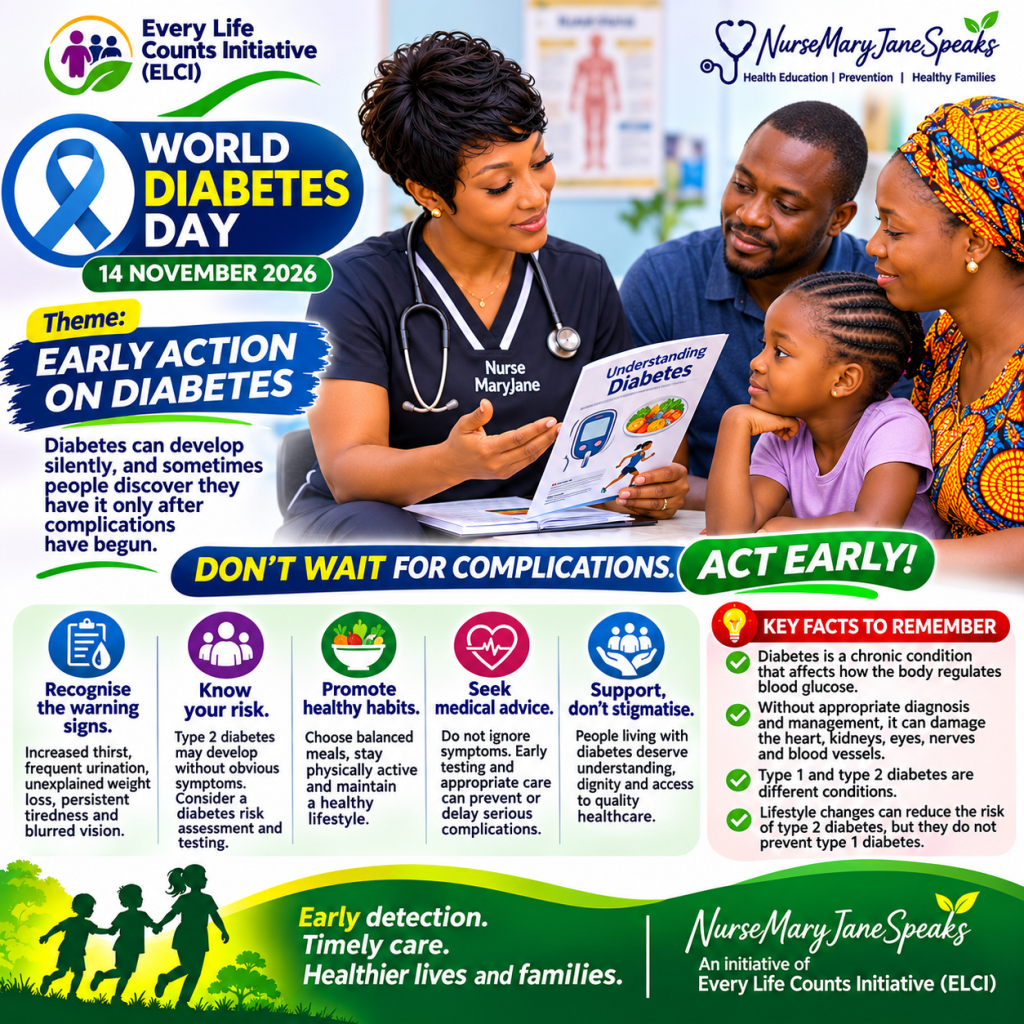
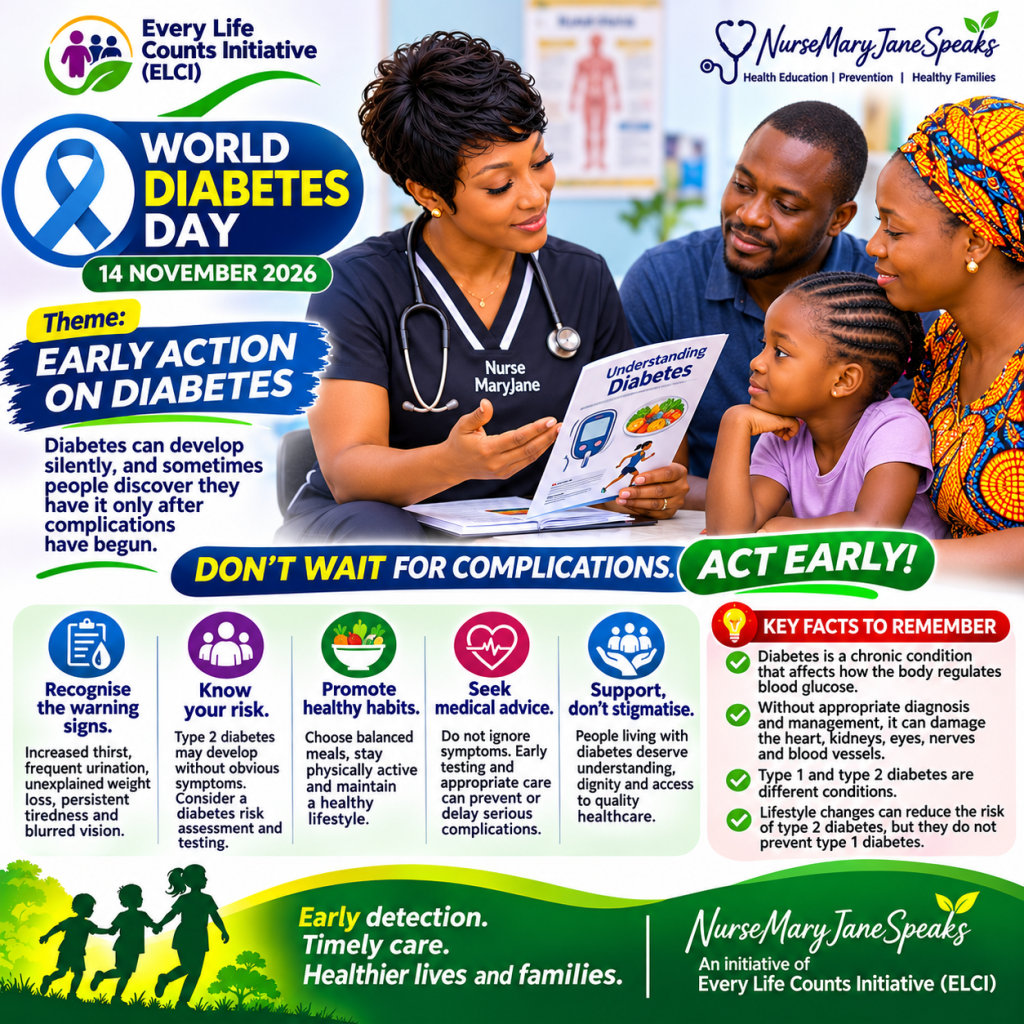
As we commemorate World Diabetes Day 2026, NurseMaryJaneSpeaks and Every Life Counts Initiative (ELCI) join the global call to promote awareness, encourage early detection, support healthy living and improve access to appropriate diabetes care.
Our message is simple:
Don’t wait for complications. Act early. Protect your health.
1. Understanding Diabetes
When we eat foods containing carbohydrates, the digestive system breaks them down into glucose, which enters the bloodstream.
In response, the pancreas releases insulin, allowing glucose to enter body cells for energy or storage.
In people living with diabetes, this process is impaired. Depending on the type of diabetes, the pancreas may produce little or no insulin, or the body may become resistant to insulin’s effects.
Consequently, blood glucose levels remain higher than normal.
Persistent hyperglycaemia can damage blood vessels and nerves, affecting the heart, kidneys, eyes, feet and other organs.
2. Types of Diabetes
Although diabetes is commonly discussed as one condition, there are different types, each with distinct causes and management requirements.
A. Type 1 Diabetes
Type 1 diabetes is an autoimmune condition in which the body’s immune system mistakenly attacks and destroys the insulin producing beta cells of the pancreas.
As these cells are progressively destroyed, the pancreas produces little or no insulin.
People living with type 1 diabetes therefore require insulin treatment to survive.
Type 1 diabetes commonly develops during childhood and adolescence, although it can occur at any age. It has traditionally been called juvenile diabetes because of its frequent presentation in younger people.
Important facts:
– It is an autoimmune condition.
– It is not caused by eating too much sugar.
– It is not caused by poor dietary habits.
– It cannot currently be prevented through lifestyle modification or healthy eating.
– Insulin treatment is essential.
– Appropriate nutrition, physical activity and regular monitoring are important components of its management.
Children and adolescents living with type 1 diabetes require coordinated care involving healthcare professionals, parents, caregivers and school personnel.
B. Type 2 Diabetes
Type 2 diabetes is a metabolic condition characterised by insulin resistance and progressive impairment of insulin secretion.
In insulin resistance, body cells do not respond adequately to insulin. The pancreas initially attempts to compensate by producing more insulin, but over time, it may become unable to meet the body’s requirements.
This results in elevated blood glucose levels.
Type 2 diabetes is the most common form of diabetes.
Risk factors include:
– Family history of type 2 diabetes.
– Excess body weight, particularly excess abdominal fat.
– Physical inactivity.
– Unhealthy dietary patterns.
– Increasing age.
– Previous gestational diabetes.
– Certain metabolic and medical conditions.
However, people without excess body weight can also develop type 2 diabetes.
Can type 2 diabetes be prevented?
In many individuals, the risk of developing type 2 diabetes can be reduced or its onset delayed through appropriate lifestyle interventions.
These include healthy dietary patterns, regular physical activity, maintaining a healthy body weight where appropriate, avoiding tobacco and seeking professional advice about individual risk.
C. Gestational Diabetes
Gestational diabetes is a form of diabetes first recognized during pregnancy, usually when the body cannot produce enough insulin to meet the increased demands of pregnancy.
Pregnancy hormones can contribute to insulin resistance.
Gestational diabetes can increase the risk of complications for both mother and baby if not appropriately managed.
Potential complications include:
– Excessive fetal weight/growth.
– Difficulties during delivery.
– Increased risk of hypertensive disorders in pregnancy.
– Neonatal hypoglycemia.
– Increased future risk of type 2 diabetes for the mother.
Women diagnosed with gestational diabetes require appropriate monitoring, nutrition guidance, physical activity advice where suitable and medical management.
Follow up testing after delivery is also important because the risk of developing type 2 diabetes remains elevated.
3. Recognizing the Signs and Symptoms of Diabetes
One of the challenges associated with diabetes is that symptoms may develop gradually and can sometimes go unnoticed.
Common symptoms include:
1. Increased thirst (polydipsia)
A person may experience persistent thirst because elevated blood glucose can increase fluid loss through urination.
2. Frequent urination (polyuria)
Excess glucose in the blood can exceed the kidneys’ ability to reabsorb it, causing glucose to appear in urine and increasing urine production.
3. Increased hunger (polyphagia)
Despite having glucose in the bloodstream, the body’s cells may not receive or utilize it effectively, contributing to increased hunger.
4. Unexplained weight loss
This is particularly important in type 1 diabetes, where inadequate insulin can cause the body to break down fat and muscle for energy.
5. Persistent tiredness
Reduced effective glucose utilization and dehydration can contribute to fatigue.
6. Blurred vision
Changes in blood glucose can affect fluid balance in the eyes, resulting in temporary visual changes.
7. Slow wound healing and recurrent infections
Persistently elevated blood glucose can impair immune function and tissue repair, increasing susceptibility to certain infections and delayed wound healing.
Not everyone experiences these symptoms. Some people, particularly those with type 2 diabetes, may have few or no obvious symptoms for years.
This is why appropriate risk assessment and screening are important.
Important warning: Diabetic ketoacidosis
Diabetic ketoacidosis (DKA) is a serious and potentially life-threatening complication that occurs when there is insufficient insulin and the body produces excessive ketones.
It is particularly associated with type 1 diabetes and may be the first presentation of the condition in a child or young person.
Warning signs include:
– Excessive thirst and frequent urination.
– Abdominal pain.
– Nausea and vomiting.
– Deep or rapid breathing.
– Fruity smelling breath.
– Severe dehydration.
– Unusual drowsiness or confusion.
Suspected DKA requires immediate emergency medical attention.
Parents and caregivers should not mistake these symptoms for an ordinary childhood illness or delay seeking help.
4. The Relationship Between Nutrition and Diabetes
Nutrition plays an important role in diabetes prevention, management and long-term health.
However, the relationship between nutrition and diabetes differs depending on the type of diabetes.
Understanding this distinction is essential to providing accurate health education and preventing harmful misconceptions.
Nutrition and Type 1 Diabetes
Type 1 diabetes is an autoimmune condition. It is not caused by excessive sugar consumption, unhealthy eating or parental feeding practices.
A healthy diet cannot prevent type 1 diabetes or replace the insulin required for its treatment.
Nevertheless, nutrition is essential in the management of type 1 diabetes.
Appropriate nutrition helps to:
– Support normal childhood growth and development.
– Maintain adequate energy and nutrient intake.
– Coordinate carbohydrate intake with insulin administration.
– Support more effective blood glucose management.
– Promote cardiovascular health.
– Reduce the risk of nutritional deficiencies.
For children and adolescents living with type 1 diabetes, carbohydrate awareness and meal planning are particularly important because carbohydrate intake influences post meal blood glucose levels and mealtime insulin requirements.
Nutrition plans should be individualized and developed with qualified healthcare professionals, preferably including a dietitian experienced in diabetes care.
Remember: A child does not develop type 1 diabetes because of eating too much sugar.
Nutrition and Type 2 Diabetes
Unlike type 1 diabetes, type 2 diabetes has a stronger relationship with modifiable lifestyle and metabolic risk factors.
Dietary patterns that contribute to excess energy intake, unhealthy weight gain and metabolic dysfunction can increase the risk of developing type 2 diabetes.
Healthy nutrition can help reduce or delay this risk.
Recommended practices include:
– Eating a variety of vegetables and whole fruits.
– Including beans, peas and other legumes.
– Choosing whole grains and high fiber foods.
– Consuming appropriate portions of meals.
– Reducing frequent consumption of sugar sweetened beverages.
– Limiting excessive intake of highly processed foods.
– Choosing healthier sources of dietary fats.
– Maintaining balanced and consistent eating patterns.
Healthy eating is not about starving, skipping meals or completely eliminating carbohydrates.
It is about making informed food choices, achieving dietary balance and adopting sustainable eating habits.
Nutrition and Children Living With Diabetes
Children and adolescents living with either type 1 or type 2 diabetes need adequate nutrition to support growth, development, learning and physical activity.
Their dietary needs must be considered alongside their medical treatment.
Parents, caregivers and schools should understand that children with diabetes should not be unnecessarily deprived of food or subjected to restrictive diets without professional guidance.
Nutrition education should be age appropriate, culturally relevant and sensitive to the family’s circumstances.
The important distinction: Healthy nutrition cannot prevent type 1 diabetes, but it is essential in managing type 1 and type 2 diabetes. Healthy dietary patterns can also reduce the risk of type 2 diabetes.
5. How Can We Reduce the Risk of Type 2 Diabetes?
Although not all cases of diabetes are preventable, evidence based lifestyle interventions can help reduce the risk of type 2 diabetes.
A. Promote healthy eating
Encourage balanced meals that include:
– Vegetables.
– Whole fruits.
– Beans and other legumes.
– Whole grains.
– Appropriate protein sources.
– Healthy fats.
Reduce excessive consumption of sugary drinks, highly processed foods and foods containing excessive amounts of salt, unhealthy fats and added sugars.
B. Encourage regular physical activity
Physical activity improves insulin sensitivity, supports cardiovascular health and helps maintain a healthy body weight.
Children and adolescents should be encouraged to participate in age appropriate physical activities such as walking, dancing, cycling, swimming and active outdoor play.
Adults should also incorporate regular physical activity into their daily routines.
C. Maintain a healthy body weight
For people at increased risk of type 2 diabetes, appropriate weight management can improve insulin sensitivity and reduce metabolic risk.
Weight related advice should be individualized and delivered without stigma, particularly for children and adolescents who are still growing.
D. Avoid tobacco
Tobacco use is associated with an increased risk of type 2 diabetes and cardiovascular disease.
Avoiding tobacco and seeking support to stop smoking are important components of preventive healthcare.
E. Encourage appropriate health screening
People with risk factors for diabetes should discuss appropriate screening with qualified healthcare professionals.
Early identification of prediabetes or diabetes provides an opportunity for timely intervention.
6. Diagnosis and Early Detection
Diabetes cannot be reliably diagnosed by symptoms alone.
Appropriate laboratory testing is required.
Common diagnostic tests include:
Fasting Plasma Glucose (FPG): Measures blood glucose after an overnight fast.
Glycated Hemoglobin (HbA1c): Estimates average blood glucose over approximately two to three months.
Oral Glucose Tolerance Test (OGTT): Measures the body’s response to a standardized glucose drink.
Random Plasma Glucose: Measures blood glucose at any time, particularly useful when classic symptoms of hyperglycemia are present.
In non pregnant individuals, commonly used diagnostic thresholds include:
Test| Diabetes diagnostic threshold
Fasting plasma glucose| ≥126 mg/dL (7.0 mmol/L)
HbA1c| ≥6.5%
2-hour OGTT| ≥200 mg/dL (11.1 mmol/L)
Random plasma glucose| ≥200 mg/dL (11.1 mmol/L), with classic symptoms or hyperglycaemic crisis
In the absence of unequivocal hyperglycemia, an abnormal result generally requires confirmation with repeat testing.
Diagnostic criteria during pregnancy differ and require specific clinical guidance.
Screening recommendations should be individualized according to age, risk factors, pregnancy status and applicable clinical guidelines.
7. Living With Diabetes: Preventing Complications
Diabetes can affect several organs and body systems, particularly when blood glucose remains elevated over time.
Possible complications include:
Cardiovascular disease: Diabetes increases the risk of heart disease and stroke.
Diabetic kidney disease: Persistent hyperglycemia can damage the small blood vessels in the kidneys.
Diabetic retinopathy: Damage to retinal blood vessels can impair vision and may result in blindness.
Diabetic neuropathy: Nerve damage can cause pain, tingling, numbness or loss of sensation, particularly in the feet.
Diabetic foot complications: Reduced sensation and impaired circulation can contribute to foot ulcers, infections and, in severe cases, amputation.
Oral health problems: Diabetes can increase the risk of gum disease and other oral health complications.
Appropriate diabetes management includes:
– Regular clinical reviews.
– Individualized blood glucose monitoring.
– Appropriate medication and insulin use.
– Blood pressure and lipid management.
– Regular eye examinations.
– Kidney function assessment.
– Foot examinations and appropriate foot care.
– Healthy nutrition and physical activity.
– Education and psychosocial support.
Early diagnosis and consistent management can prevent or delay many diabetes-related complications.
8. The Role of Families, Schools and Communities
Diabetes prevention and management require collective responsibility.
Healthcare professionals alone cannot address every challenge associated with diabetes.
Families, schools, workplaces, community organizations and government health agencies all have important roles to play.
Parents and caregivers
Parents and caregivers can:
– Encourage balanced and nutritious meals.
– Promote active family lifestyles.
– Recognize possible warning signs of diabetes.
– Seek appropriate medical assessment when symptoms occur.
– Support children living with diabetes without blame or discrimination.
– Follow recommended treatment and monitoring plans.
Schools
Schools can support diabetes awareness and student wellbeing by:
– Promoting age appropriate nutrition education.
– Encouraging regular physical activity.
– Providing safe opportunities for children living with diabetes to monitor glucose and receive prescribed treatment.
– Training relevant staff to recognize hypoglycemia and other emergencies.
– Avoiding discrimination and stigmatization.
– Maintaining communication with parents and healthcare teams.
A child living with diabetes should be supported to participate in learning, sports and normal school activities as safely as possible.
Communities
Community organizations can:
– Organize diabetes awareness and screening education.
– Encourage appropriate health checks.
– Promote healthy food environments.
– Support access to reliable health information.
– Challenge myths and stigma associated with diabetes.
– Encourage people at risk to seek professional advice.
9. Why Diabetes Awareness Matters to ELCI
At Every Life Counts Initiative (ELCI), we believe that prevention begins with knowledge, awareness and meaningful action.
Our commitment to preventive health education extends beyond the treatment of existing illnesses.
We want children, families, schools and communities to understand the factors that influence health, recognize potential warning signs and make informed decisions about their wellbeing.
Diabetes provides an important opportunity to strengthen education around nutrition, physical activity, early detection, healthy family habits and access to healthcare.
Through school health education, family awareness and community outreach, ELCI seeks to promote a culture in which prevention and early action become part of everyday life.
We also recognize the importance of supporting people already living with diabetes.
They deserve accurate information, appropriate treatment, dignity, inclusion and compassionate care.
Prevention should never become blame, and health education should never become stigma.
Conclusion: Early Action Can Change the Future
Diabetes is a complex condition, but early recognition, appropriate treatment, healthy nutrition, physical activity and consistent medical care can make a meaningful difference.
While type 1 diabetes cannot currently be prevented through lifestyle changes, appropriate nutrition and medical management are essential for people living with the condition.
Type 2 diabetes, on the other hand, can often be prevented or delayed through evidence based lifestyle interventions, early risk identification and appropriate support.
As we commemorate World Diabetes Day 2026, let us encourage families and communities to recognize the warning signs, understand their risk and seek appropriate healthcare without delay.
Let us also remember that people living with diabetes deserve support, not judgement.
Don’t wait for complications. Act early. Protect your health. Build healthier families and communities.
Every life counts. Every informed decision matters.
NurseMaryJaneSpeaks
An initiative of Every Life Counts Initiative (ELCI)
References and Further Reading
1. World Health Organization (WHO). Diabetes – Fact Sheet and Questions and Answers.
2. International Diabetes Federation (IDF). World Diabetes Day 2026–2027: Early Action on Diabetes.
3. American Diabetes Association. Standards of Care in Diabetes—2026.
4. American Diabetes Association. Children and Adolescents: Standards of Care in Diabetes—2026.
5. World Health Organization (WHO). Healthy Diet.
6. International Diabetes Federation (IDF). Diabetes Atlas.
Disclaimer: This article is intended for public health education and awareness. It does not replace individual medical assessment, diagnosis, dietary counselling or treatment. Anyone experiencing symptoms suggestive of diabetes should seek assessment from a qualified healthcare professional.


Leave a Reply