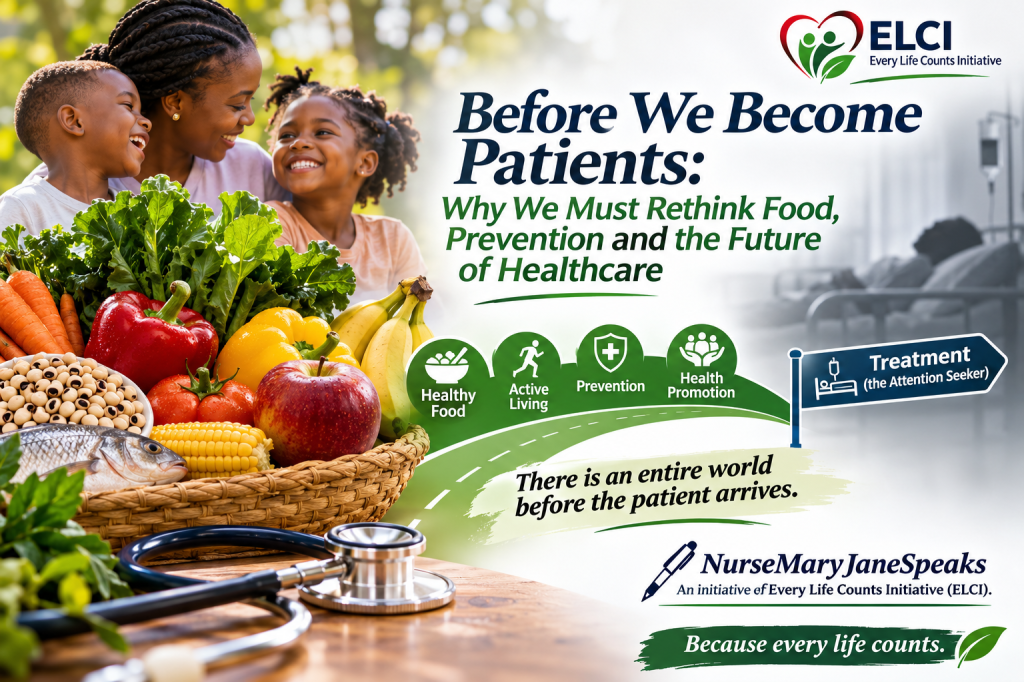
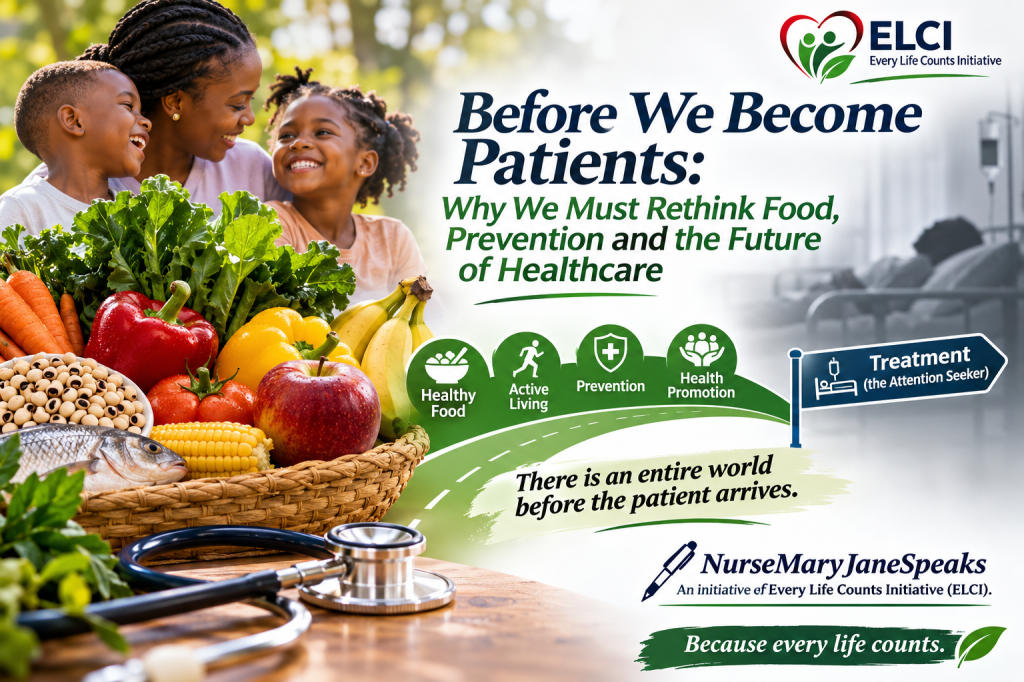
What if we started paying more attention to preventing illness than waiting to treat it?
What if conversations about food, nutrition and healthy living received the same urgency and attention we give to disease, medication and hospital treatment?
Throughout my nursing journey, I have witnessed the human side of illness. I have held tiny hands, cared for vulnerable patients, witnessed families struggle and encountered situations that have continually reinforced one important conviction: healthcare must extend beyond the hospital bedside.
I believe food deserves a more prominent place in our conversations about health. I believe prevention should never be an afterthought, and health promotion should never be reduced to occasional awareness campaigns.
Treatment remains essential when illness occurs. But what happens before someone becomes a patient?
There is an entire world before the patient arrives, and that is where I believe we must begin paying greater attention.
In this article, I share my professional perspective on food, nutrition, preventive healthcare, health promotion and why I believe it is time for a paradigm shift.
This is more than an article. It is a conversation I believe we need to have.
I invite you to read, reflect, engage and share your perspective. Agreement is welcome, constructive disagreement is welcome, and meaningful conversations are encouraged.
Because the future of healthcare must not be defined by how well we treat illness alone, but also by how intentionally we promote health and prevent avoidable disease.
Read the full article. Let’s rethink prevention.
NurseMaryJaneSpeaks
An initiative of Every Life Counts Initiative (ELCI).
Because every life counts. ❤️
By NurseMaryJaneSpeaks
An initiative of Every Life Counts Initiative (ELCI)
Introduction: Perhaps We Have Been Paying Attention to the Wrong End of Healthcare
What if some of the most important healthcare decisions we make are not the ones made in hospitals, consulting rooms or emergency departments, but the seemingly ordinary decisions we make every day about what we eat, how we live and the habits we gradually establish?
What if we paid as much attention to preventing illness as we currently pay to treating it?
And what if we began to appreciate that the relationship between food and health is not a conversation we should reserve for nutritionists, dietitians or individuals already living with a medical condition, but one that deserves a central position in public health discourse?
These are questions worth asking.
My perspective on health promotion and disease prevention has continued to evolve through years of professional nursing practice, personal observations and, more recently, my growing commitment to public health.
One conviction, however, remains unchanged: Food deserves considerably more attention in our conversations about health than we currently give it.
What we eat matters. How we eat matters. The nutritional quality of what we consistently consume matters.
Food is not simply something we consume to satisfy hunger. It supplies the nutrients required for growth, tissue repair, immune function, metabolism and the maintenance of normal physiological processes. It influences our health across the life course, from childhood development to adulthood and ageing.
Yet, somehow, we have managed to make conversations about food and nutrition appear secondary to conversations about illness and treatment.
Perhaps it is time to reconsider that approach.
FOOD IS MORE THAN NOURISHMENT: IT IS AN INVESTMENT IN HEALTH
I have often maintained that what we eat contributes significantly to who we become, biologically and physiologically.
The popular expression, “We are what we eat,” may sound simplistic, but its underlying message deserves serious consideration.
Our dietary patterns influence nutritional status, body composition, metabolic health and the risk of developing several chronic diseases. Adequate nutrition supports childhood growth, cognitive development, immune function and the body’s ability to maintain and repair itself.
Poor dietary patterns, on the other hand, can contribute to nutritional deficiencies, unhealthy weight gain, metabolic disturbances and increased susceptibility to diet-related noncommunicable diseases.
This is why I find the expression “Food is Medicine” particularly interesting.
I understand that the statement can generate disagreement, especially when interpreted literally. Food is not a pharmaceutical prescription, and no particular meal, fruit, vegetable or dietary pattern can independently cure every disease.
However, dismissing the expression entirely would mean overlooking an important public health reality.
Food has therapeutic relevance, nutritional value and preventive potential.
Appropriate nutrition is an integral component of disease prevention and, in many circumstances, clinical management. Medical nutrition therapy is already an established component of managing conditions such as diabetes, cardiovascular diseases, kidney diseases and malnutrition.
Why, then, should we wait until someone becomes ill before taking nutritional education seriously?
Why should knowledge about food become urgent only after a diagnosis?
I believe we must change that narrative.
We must move beyond treating nutrition as an occasional health conversation and begin recognising it as a fundamental component of everyday healthcare.
THE TREATMENT ATTENTION SEEKER: WHY PREVENTION MUST NOT BE AN AFTERTHOUGHT
Let me make something clear: I am not undermining treatment.
Treatment is indispensable. When illness occurs, people deserve timely diagnosis, appropriate clinical interventions, medication where indicated, rehabilitation and compassionate care.
Healthcare professionals must continue to provide these services, and healthcare systems must remain adequately equipped to deliver them.
However, I have a concern about the disproportionate attention that treatment sometimes receives in comparison with prevention and health promotion.
I sometimes refer to treatment, metaphorically, as the attention seeker.
Why?
Because illness often attracts immediate attention. A diagnosis generates concern. Symptoms demand action. Complications create urgency. Hospital admissions remind families and communities of the importance of healthcare.
Suddenly, everyone wants to know what happened, what medication is required, which hospital can provide care and how much treatment will cost.
But what happened before the illness?
Were there opportunities for early intervention?
Was the individual adequately informed about nutrition, physical activity and other modifiable health risks?
Were preventive services accessible?
Did the family understand the warning signs?
Was there an opportunity to identify and address the problem before it progressed?
These questions deserve equal attention.
My argument is not that prevention can eliminate every disease or that treatment should take a back seat when someone is sick.
We must make food and nutrition central to conversations about healthy living, without forgetting that health is also shaped by education, income, housing, sanitation, physical activity, environmental conditions and access to healthcare.
Rather, we must stop allowing the urgency of treating illness to overshadow the importance of preventing avoidable illness.
A healthcare system that invests in treatment but neglects prevention will continually find itself responding to problems that might have been reduced through earlier interventions.
Prevention should not be the neglected relative of healthcare.
It should be one of its strongest foundations.
THE CHILDREN WE OUGHT TO PROTECT: WHEN PREVENTION BECOMES PERSONAL
There is a dimension to this conversation that goes beyond professional knowledge.
It is human.
Throughout my nursing journey, I have encountered children whose lives have been affected by illnesses, nutritional challenges and complications that remind me of the importance of early intervention.
I have cared for women and children. I have witnessed vulnerability. I have seen people confront illnesses with limited resources, and I have seen families struggle with the financial and emotional consequences of accessing healthcare.
Some of the experiences that remain with me are not simply about the diseases themselves, but about the opportunities that may have existed earlier in the course of those illnesses.
I have seen underserved individuals reach healthcare facilities when their conditions have already progressed, sometimes because financial limitations, inadequate health information, delayed presentation or barriers to accessing services prevented earlier intervention.
These experiences have strengthened my conviction that health education must reach people before they become patients.
A child deserves more than treatment when illness occurs.
A child deserves access to appropriate nutrition, safe food, health education, growth monitoring, immunisation, clean water, sanitation and timely healthcare.
A mother deserves more than emergency intervention when preventable complications arise.
Families deserve the knowledge and support required to make informed health decisions.
We must also recognise that nutrition related illnesses are not always the result of individual choices. Poverty, food insecurity, inadequate sanitation, limited access to healthcare, environmental conditions and insufficient nutrition education can all influence health outcomes.
It would therefore be unfair to tell people simply to eat healthily without considering whether they can afford or access nutritious food.
Prevention must be accompanied by opportunity.
Health education must be accompanied by accessibility.
And public health interventions must recognise the realities of the communities they seek to serve.
Because a child’s life counts.
A life that matters should not be denied opportunities for healthy growth and development because preventable nutritional challenges and gaps in health education were ignored.
WHAT IF WE PRESCRIBED KNOWLEDGE BEFORE WE PRESCRIBED MEDICATION?
Imagine a society where nutritional education is not introduced only after someone develops hypertension, diabetes or obesity.
Imagine children growing up understanding the importance of balanced meals, dietary diversity, adequate protein, fruits, vegetables and appropriate food choices.
Imagine parents receiving practical information about infant and young child feeding, food safety, nutritional requirements and the importance of healthy eating habits during childhood.
Imagine schools treating nutrition education as an essential part of health literacy rather than an occasional classroom discussion.
Imagine primary healthcare facilities dedicating meaningful attention to preventive nutrition counselling, early screening and health promotion.
Imagine communities understanding that healthy eating does not necessarily mean expensive imported foods, fashionable diets or commercially marketed nutritional products.
There is considerable value in helping people understand the nutritional potential of locally available foods.
In our Nigerian communities, foods such as beans, vegetables, fruits, groundnuts, fish, eggs, millet, maize and other locally available staples can contribute to healthy dietary patterns when appropriately combined and consumed according to individual nutritional needs.
We need to make nutritional knowledge practical, culturally relevant and accessible.
The World Health Organization recognises healthy diets as fundamental to growth, development, wellbeing and the prevention of malnutrition and several noncommunicable diseases.
This is not merely an opinion. It is an established public health position.
Yet, how much attention do we collectively give to translating this knowledge into everyday decisions?
Perhaps we need to start asking a different question.
Instead of waiting to prescribe medication after a disease has developed, what can we do today to help individuals understand the nutritional and lifestyle choices that influence their health tomorrow?
URBANISATION, CHANGING FOOD PATTERNS AND THE GENERATION WE ARE RAISING
Another issue that deserves serious consideration is the changing relationship between food, lifestyle and our environment.
Urbanisation has brought numerous benefits, including improved access to services, technology, education, employment opportunities and healthcare infrastructure.
However, it has also contributed to changing lifestyles, food environments and patterns of consumption.
Convenience increasingly influences what people eat.
Highly processed and energy dense foods are readily available in many environments. Busy schedules, reduced opportunities for physical activity, aggressive product marketing and changing household routines can influence dietary behaviours.
We are also raising children in environments where food preferences are increasingly shaped by advertising, convenience and exposure to commercially promoted products.
This raises important questions.
Are we teaching children to understand food, or are we simply allowing them to develop preferences based on availability and marketing?
Are we intentionally building healthy dietary habits, or are we waiting until unhealthy patterns become difficult to change?
Are we making healthy lifestyle choices attractive, accessible and sustainable?
These questions deserve more than individual answers. They require families, schools, healthcare professionals, policymakers, food producers and communities to participate in the conversation.
I have always been interested in comparing the lifestyles and food practices of previous generations with those of the present generation.
There are differences worth exploring, although such comparisons must be approached critically rather than assuming that previous generations were automatically healthier.
This is a conversation I intend to explore further in another article.
For now, one thing remains clear: our changing food environment deserves greater attention, particularly when considering the health and future of our children.
PREVENTION AND HEALTH PROMOTION MUST BECOME A LIFESTYLE, NOT A CAMPAIGN
One of my concerns about public health advocacy is that we sometimes approach prevention as an event rather than a continuous responsibility.
We organise awareness campaigns, commemorate international health days, distribute educational materials and encourage people to adopt healthier behaviours.
These interventions have value.
But what happens after the campaign?
What happens when the banners come down?
What happens when the awareness messages disappear from social media?
Do people retain the knowledge? Do they have the resources to apply it? Have their environments changed to support healthier decisions?
This is where I believe we need a paradigm shift.
Health promotion must become part of our everyday culture.
We should be singing, discussing, teaching and normalising healthy lifestyles with the same enthusiasm with which we promote products, trends and conveniences that may not always support our health.
This is not about condemning every commercially available food product or suggesting that individuals must abandon everything they enjoy.
It is about informed choices, moderation, nutritional quality and accountability.
It is about questioning what we consume, understanding how food is produced and marketed, and recognising the influence of our environment on our health.
Most importantly, it is about making prevention sustainable.
A successful health promotion initiative should not be measured only by how many people attended an event or viewed an awareness video.
We should also ask whether knowledge improved, whether behaviours changed, whether access to preventive services increased and whether communities became better equipped to protect their health.
ELCI: BUILDING A CULTURE OF PREVENTION, ONE LIFE AT A TIME
This is the thinking behind Every Life Counts Initiative (ELCI).
Our vision extends beyond occasional health awareness activities.
We want to contribute to a culture where preventive healthcare, health education, nutritional awareness and healthy living become intentional parts of individual and community life.
We believe health education should begin early, reach families, enter schools and extend into communities.
We believe children should understand the importance of healthy eating before unhealthy dietary patterns become deeply established.
We believe parents and caregivers deserve accessible, practical and culturally appropriate health information.
We believe communities should have opportunities to understand preventable health risks and make informed decisions.
And we believe that healthcare professionals have an important role to play beyond the walls of hospitals and clinical departments.
Through ELCI, we hope to establish a sustainable approach to health promotion that does not depend on a single campaign, a particular commemorative day or temporary public attention.
We want prevention to become a lifestyle.
We want health education to become a continuous process.
We want nutritional knowledge to become practical.
We want children, families and communities to become active participants in protecting their health.
Our ambition is not to suggest that every illness can be prevented or that medical treatment will become unnecessary.
Rather, we want to contribute to reducing avoidable health risks, promoting early intervention and ensuring that people have the knowledge and opportunities to make healthier choices.
We are not waiting for people to become patients before we start talking about their health.
That is the philosophy we want to advance.
A FINAL THOUGHT: BEFORE THE NEXT PATIENT ARRIVES
I may not yet command the largest audience. My voice may not be among the most widely recognised in public health conversations.
But I am a nurse.
I am a nurse who has stood beside hospital beds, held tiny hands, shaken hands with people experiencing some of their most vulnerable moments, witnessed fear and listened to people confront the uncertainty of illness.
I have seen the human side of healthcare.
I have also come to appreciate that the work of protecting life cannot begin and end at the hospital bedside.
There is an entire world before the patient arrives.
There are childhood eating habits, family food choices, environmental influences, missed opportunities for health education, inaccessible preventive services and communities that need information long before illness becomes an emergency.
We must pay attention to that world.
We must stop treating prevention as an optional addition to healthcare and begin giving it the attention, investment and institutional support it deserves.
Treatment will always have its place.
When illness comes, we must be ready to treat it.
But before it comes, we must be intentional about prevention.
Perhaps the question we should be asking is not simply how well we can treat the diseases affecting our communities, but how effectively we are preparing those communities to avoid preventable risks in the first place.
I believe the time for that conversation is now.
And I intend to keep having it.
Through my professional practice, through my public health journey, and through Every Life Counts Initiative, I will continue to advocate for a future where prevention receives the attention it deserves, where nutrition is understood as a foundation of health, and where healthy living becomes a sustainable way of life rather than a temporary campaign.
Because every life counts. And every life deserves the opportunity to live healthier.
NurseMaryJaneSpeaks
An initiative of Every Life Counts Initiative (ELCI).
Because every life counts.
Supported by Every Life Counts Initiative.


Leave a Reply