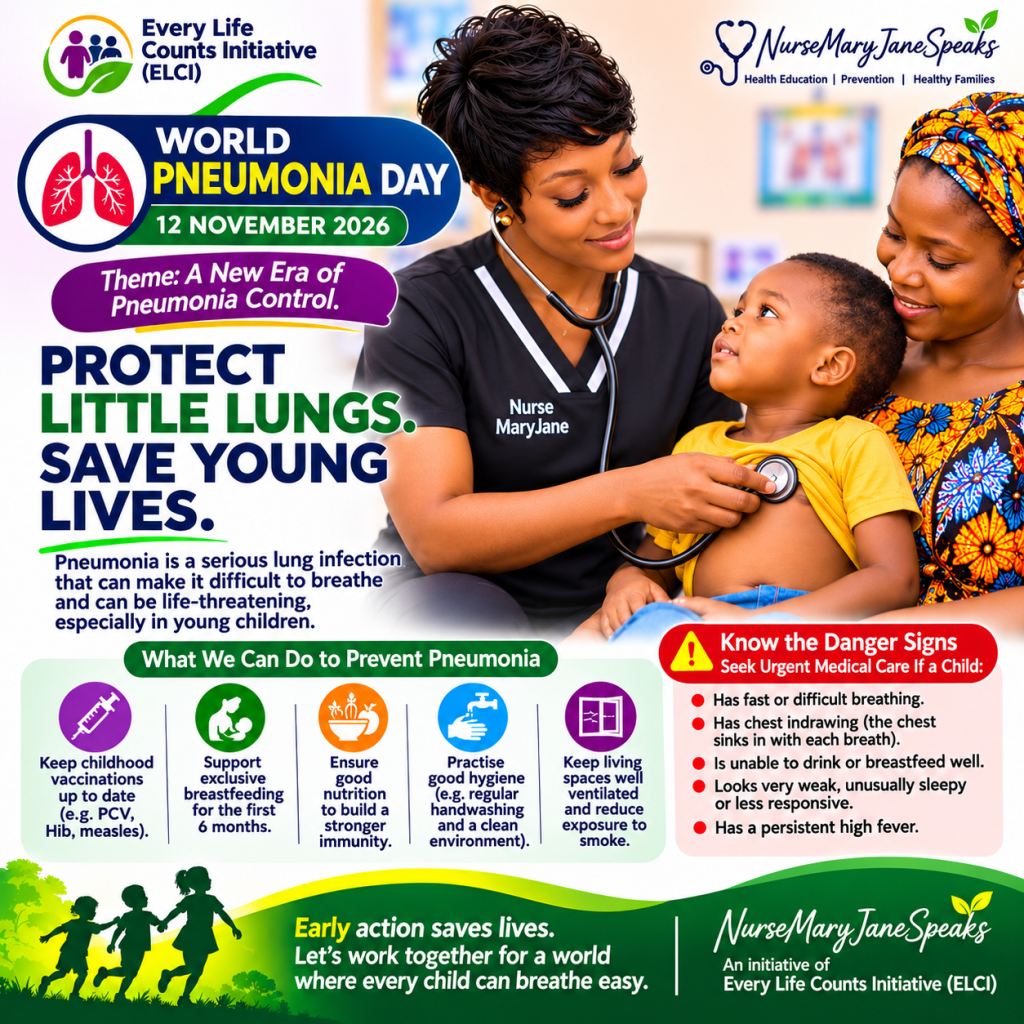
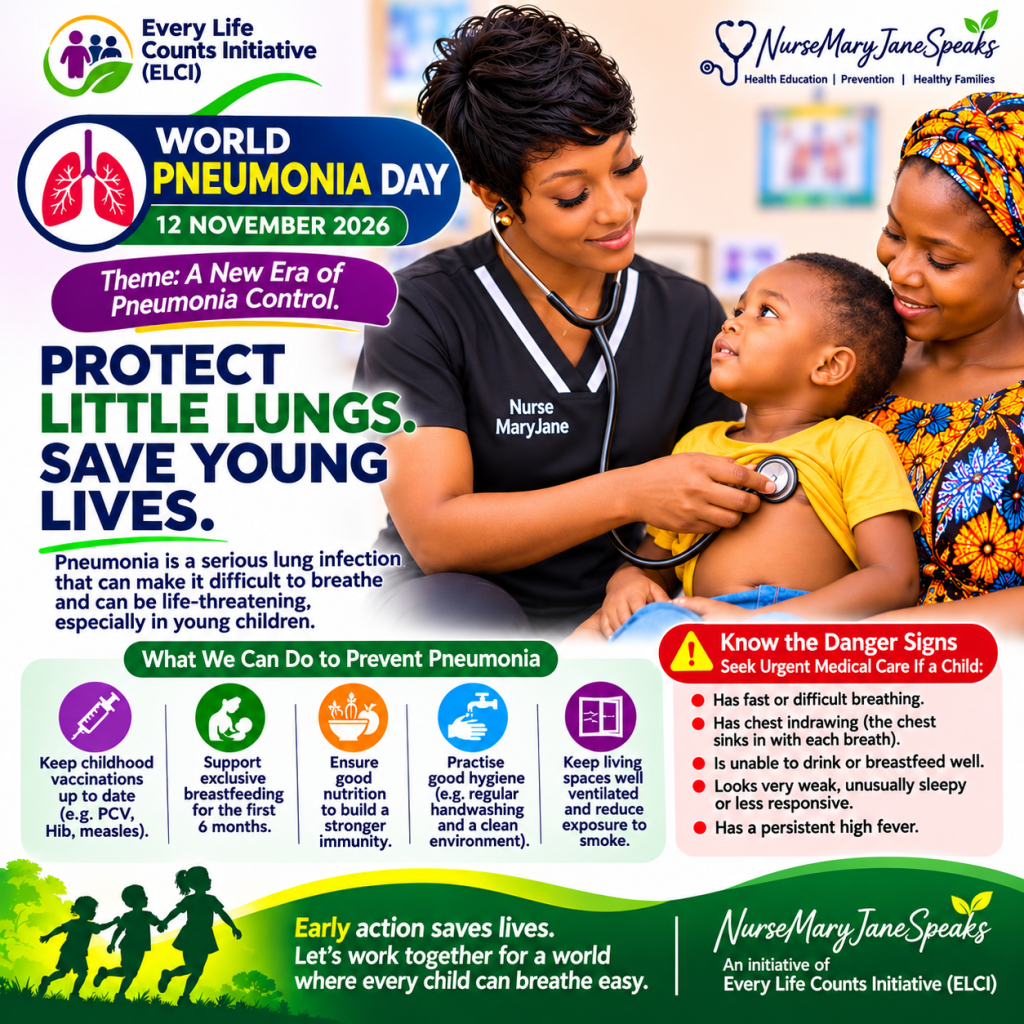
World Pneumonia Day – 12 November 2026
Introduction
Every child deserves the opportunity to breathe freely, grow healthily and enjoy a future filled with possibilities. Yet, pneumonia continues to threaten the lives and wellbeing of children, particularly those under five years of age.
Pneumonia is a potentially serious respiratory infection that affects the lungs. Although it is preventable and treatable, delayed recognition, inadequate access to healthcare, malnutrition and poor living conditions can increase the risk of severe illness and complications.
As we commemorate World Pneumonia Day 2026, NurseMaryJaneSpeaks and Every Life Counts Initiative (ELCI) join the global effort to raise awareness about childhood pneumonia, promote preventive health practices and encourage early access to appropriate medical care.
Our message is simple: Protect little lungs. Save young lives.
1. What Is Pneumonia?
Pneumonia is an acute respiratory infection that causes inflammation of the lung tissue.
The lungs contain tiny air sacs called alveoli, where oxygen enters the bloodstream and carbon dioxide is removed. When pneumonia develops, these air sacs may become filled with fluid or pus, making breathing difficult and reducing the efficiency of oxygen exchange.
Pneumonia can affect people of all ages, but infants and young children are particularly vulnerable because their immune systems are still developing.
It is one of the leading infectious causes of death among children under five worldwide. However, many cases can be prevented, and early diagnosis and appropriate treatment can significantly improve outcomes.
2. What Causes Pneumonia?
Pneumonia can be caused by different infectious organisms, including:
Bacteria: Streptococcus pneumoniae (pneumococcus) is a major bacterial cause of childhood pneumonia. Haemophilus influenzae type b (Hib) can also cause serious respiratory infections.
Viruses: Respiratory syncytial virus (RSV), influenza viruses and other respiratory viruses can cause pneumonia in children.
Fungi: Some fungal organisms can cause pneumonia, particularly in people with weakened immune systems.
The specific cause matters because treatment depends on the organism responsible and the child’s clinical condition.
3. How Does Pneumonia Spread?
Some organisms responsible for pneumonia can spread through respiratory droplets and particles released when an infected person coughs or sneezes.
Infections may also spread through close contact with respiratory secretions and contaminated hands or surfaces.
However, not every respiratory infection develops into pneumonia. A child’s age, nutritional status, immune function, vaccination history and environmental exposure can influence the risk of developing severe illness.
4. Who Is at Greater Risk?
Although any child can develop pneumonia, certain factors increase vulnerability.
These include:
- Children under five years, particularly infants.
- Premature babies and newborns.
- Children with malnutrition or weakened immune systems.
- Children who have not received recommended vaccinations.
- Children living in overcrowded environments.
- Exposure to cigarette smoke and household air pollution.
- Children with underlying medical conditions.
In many communities, poverty, inadequate housing, poor ventilation and limited access to healthcare further increase children’s vulnerability.
5. Recognising the Signs and Symptoms of Childhood Pneumonia
Early recognition is essential because pneumonia can progress and become life threatening, particularly in young children.
Common signs and symptoms include:
- Cough.
- Fever.
- Fast or difficult breathing.
- Chest discomfort.
- Reduced appetite or poor feeding.
- Unusual tiredness or weakness.
- Irritability in younger children.
Important Clinical Signs to Watch For
Fast breathing: A child may breathe noticeably faster than usual. In children under five with cough or difficulty breathing, fast breathing can be an important sign of pneumonia.
Lower chest wall indrawing: The lower part of the chest moves inward during inspiration instead of expanding normally. This may indicate significant respiratory difficulty.
Nasal flaring: The nostrils widen during breathing as the child makes increased respiratory effort.
Grunting: A short sound may occur during expiration as the child struggles to maintain effective breathing.
These signs require prompt clinical assessment.
Danger Signs Requiring Urgent Medical Attention
Parents and caregivers should seek urgent medical care if a child:
- Has severe difficulty breathing.
- Has pronounced chest indrawing.
- Cannot drink or breastfeed.
- Vomits everything offered.
- Becomes unusually sleepy, difficult to wake or unconscious.
- Develops convulsions.
- Shows signs of severe deterioration.
A child with blue or grey lips or tongue may have dangerously low oxygen levels and needs emergency medical attention.
Do not wait for all the symptoms to appear before seeking help.
6. How Can Pneumonia Be Prevented?
Prevention remains one of the most effective ways to reduce childhood pneumonia and its complications.
A. Ensure Routine Childhood Immunisation
Vaccination helps protect children against infections that can cause pneumonia.
Important vaccines include those against:
- Pneumococcal disease.
- Haemophilus influenzae type b (Hib).
- Measles.
- Pertussis (whooping cough).
- Influenza, where recommended.
Parents and caregivers should ensure children receive their recommended vaccines according to the national immunisation schedule.
For Nigerian families, the nearest primary healthcare centre can provide information about routine childhood immunisation.
B. Promote Exclusive Breastfeeding
Breastfeeding provides essential nutrients and immune protection during infancy.
The World Health Organization recommends exclusive breastfeeding for the first six months of life, followed by appropriate complementary feeding while breastfeeding continues up to two years or beyond.
Breastfeeding supports healthy growth and helps protect infants against infections, including respiratory infections.
C. Promote Adequate Nutrition
Good nutrition supports the immune system and helps children fight infections.
After six months, children should receive appropriate, diverse and nutritious complementary foods alongside continued breastfeeding.
Families should be encouraged to provide balanced meals containing appropriate sources of protein, fruits, vegetables and other essential nutrients.
D. Reduce Exposure to Household Air Pollution
Indoor air pollution is an important environmental risk factor for childhood respiratory illness.
Where possible:
- Improve ventilation in cooking and living areas.
- Reduce children’s exposure to smoke from firewood, charcoal and other polluting fuels.
- Avoid smoking inside homes.
- Keep children away from unnecessary exposure to dust and harmful fumes.
- Support the use of cleaner cooking energy where accessible.
E. Practise Good Hand Hygiene
Regular handwashing with soap and clean water helps reduce the spread of respiratory infections and other communicable diseases.
Teach children to wash their hands:
- Before eating.
- After using the toilet.
- After coughing or sneezing into their hands.
- After playing outdoors.
- After contact with respiratory secretions.
F. Maintain a Clean and Healthy Environment
Reduce overcrowding where possible, improve ventilation and maintain clean household and school environments.
Schools should promote respiratory hygiene, handwashing facilities and appropriate measures to reduce the spread of infections.
7. Diagnosis and Treatment of Pneumonia
Pneumonia requires appropriate clinical assessment.
A healthcare professional may assess the child’s:
- Respiratory rate.
- Breathing pattern and work of breathing.
- Temperature.
- Oxygen saturation.
- General appearance and level of consciousness.
- Feeding and hydration status.
Depending on the child’s condition, additional investigations may be required.
Treatment
Treatment depends on the cause and severity of the infection.
Bacterial pneumonia: Appropriate antibiotics may be prescribed following clinical assessment.
Viral pneumonia: Antibiotics do not treat viral infections. Management may involve supportive care and, in selected cases, specific antiviral treatment.
Severe pneumonia: Children with severe disease may require hospital admission, oxygen therapy, close monitoring and other supportive interventions.
Parents and caregivers should never administer leftover antibiotics or purchase antibiotics without appropriate professional assessment.
Antibiotic selection, dosage and duration must follow the child’s clinical needs and applicable treatment guidelines.
Most importantly, do not delay seeking medical attention because you are trying home remedies.
8. The Role of Parents, Schools and Communities
Preventing childhood pneumonia is not the responsibility of healthcare professionals alone.
Families, schools, community organisations and government health agencies all have important roles.
Parents and caregivers should:
- Keep children’s immunisation records up to date.
- Recognise early signs of respiratory illness.
- Seek prompt medical attention when danger signs occur.
- Promote good nutrition and appropriate infant feeding.
- Maintain smoke free and well ventilated homes.
Schools should:
- Promote hand hygiene and respiratory etiquette.
- Maintain clean, adequately ventilated classrooms.
- Encourage parents to seek medical attention when children become unwell.
- Support age appropriate health education.
- Promote awareness of vaccination and disease prevention.
Community organisations should:
- Organise accessible health education programmes.
- Promote accurate information about childhood illnesses.
- Encourage routine immunisation.
- Support families in accessing appropriate healthcare.
- Work with healthcare professionals and primary healthcare facilities to strengthen community health awareness.
9. Why Childhood Pneumonia Prevention Matters to ELCI
At Every Life Counts Initiative (ELCI), we believe that preventive healthcare begins with knowledge, awareness and practical action.
Our commitment to children and families includes promoting health education in schools, homes and communities.
Childhood pneumonia provides an important opportunity to educate families about immunisation, nutrition, breastfeeding, environmental health, hygiene and early recognition of illness.
Through community based health education, school outreach programmes and accessible health information, ELCI seeks to contribute to healthier children, informed caregivers and stronger communities.
We believe that a child who is protected, nourished and given timely access to healthcare has a better opportunity to grow, learn and thrive.
Conclusion: Every Child Deserves to Breathe Easy
Pneumonia is serious, but it should not be accepted as an unavoidable childhood illness.
With routine immunisation, adequate nutrition, breastfeeding support, improved environmental conditions, early recognition and timely medical care, many cases of severe childhood pneumonia can be prevented or managed effectively.
As we observe World Pneumonia Day 2026, let us renew our commitment to protecting children through knowledge, prevention and collective responsibility.
Protect little lungs. Save young lives.
Every child deserves a healthy beginning and the opportunity to breathe freely.
NurseMaryJaneSpeaks
An initiative of Every Life Counts Initiative (ELCI)
References and Further Reading
- World Health Organization (WHO). Pneumonia in Children.
- World Health Organization (WHO). Guidelines on the Management of Pneumonia and Diarrhoea in Children up to 10 Years of Age, 2024.
- UNICEF. Pneumonia in Children: What You Need to Know.
- UNICEF Nigeria. Childhood Pneumonia and the Importance of Prevention and Treatment.
- World Health Organization (WHO). Infant and Young Child Feeding.
This article is intended for health education and awareness. It does not replace professional medical assessment, diagnosis or treatment.


Leave a Reply